Every so often during this (very slow) kitchen renovation, I run across something that (to me) seems very common; then I realize upon then trying to purchase it, it’s not.
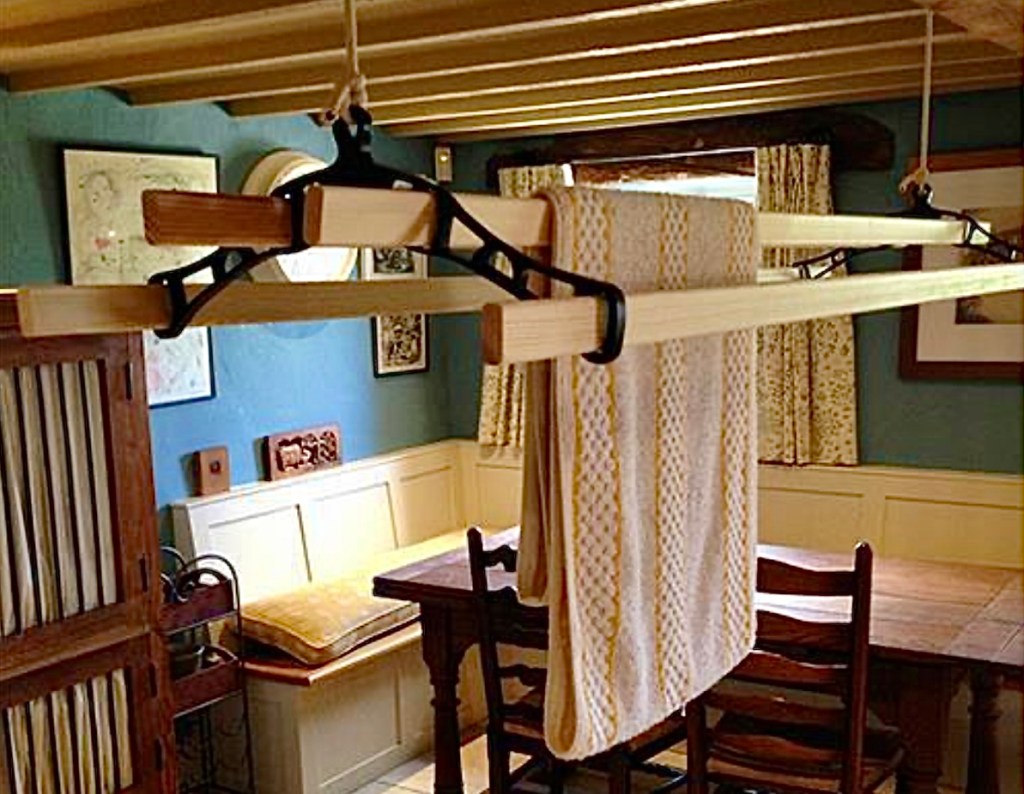
Evidently these iron-and-slats kitchen drying racks on pulleys are one of those things. They’re easily bought in Great Britain, but not so much here. I guess we prefer the standing XWing kind.
Ninety bucks. Forty of that was shipping from the UK and having to import the wooden rails as well because the standard sizes of lumber are not the same in both countries.
Ah, well. I’m happy I found one.
(not my photo)
O
All this aside, I don’t feel quite well today, and it’s a bit chilly. It’s not even cold yet, and the notification emails I receive alerting me to homes for sale in Saint Augustine are already tempting — even if the house is really not that great, needs some work, and is way too small.
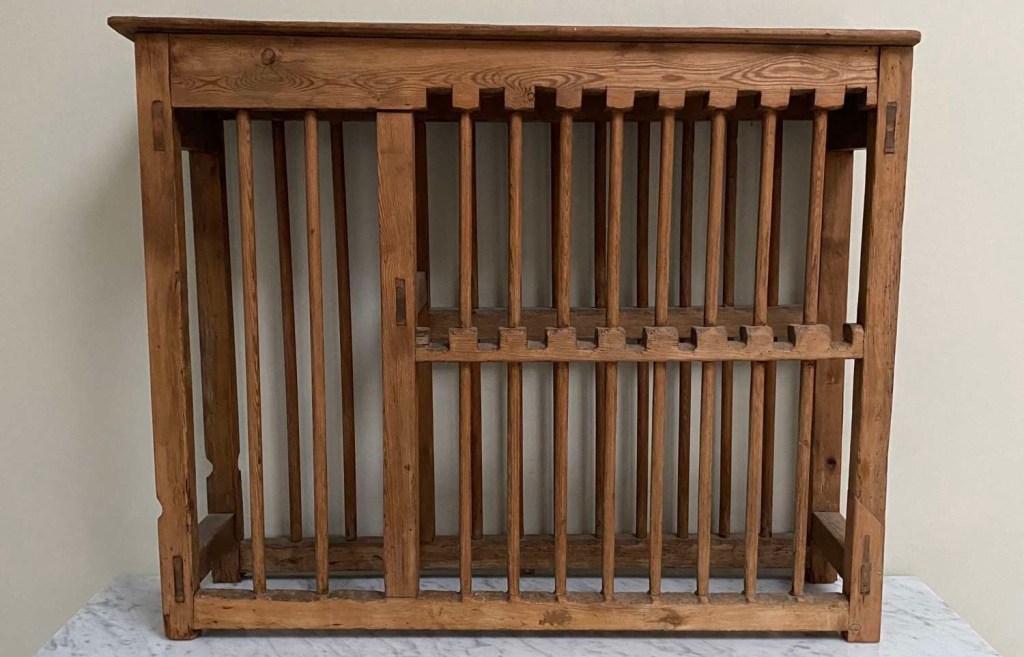
The thing that may not even have a specific name. In this case, I’m referring to a “wall-mounted early-1800s plate rack.” I read quite a bit about them, but never figured out exactly what it’s supposed to be called. They seemed to start disappearing with the Victorians. As far as the late-Colonial folks go, they probably didn’t need a name for it, knowing it more as “where my plates go.”
A salvaged rack from a vintage kitchen
O
These hung on the wall over the sink. After washing, you put your clean plates directly into it so they could drip dry.
When kitchens started to become something to look at as well as work in, we decided that you shouldn’t be able to see all of our plates and stuff. Cabinets, drawers, and counters took the place of racks, shelves, and tables. Pots were no longer hung from the ceiling, crockery was put out of sight, and all of our kitchen stuff disappeared into hidden spaces.
You don’t see them very much anymore, other than non-functional versions in custom kitchens to display fancy plates. This is where the Historian’s Tax comes in.
No, you can’t walk into a store and buy one, but there are craftspeople out there who would be happy to make you one … for $400+. That’s for pine — not even oak or another decent hardwood. And some of the examples I’ve seen from craftspeople don’t have an open bottom; which defeats the purpose entirely. For far less than half, I can get some really nice cabinet-grade wood, and build my own.
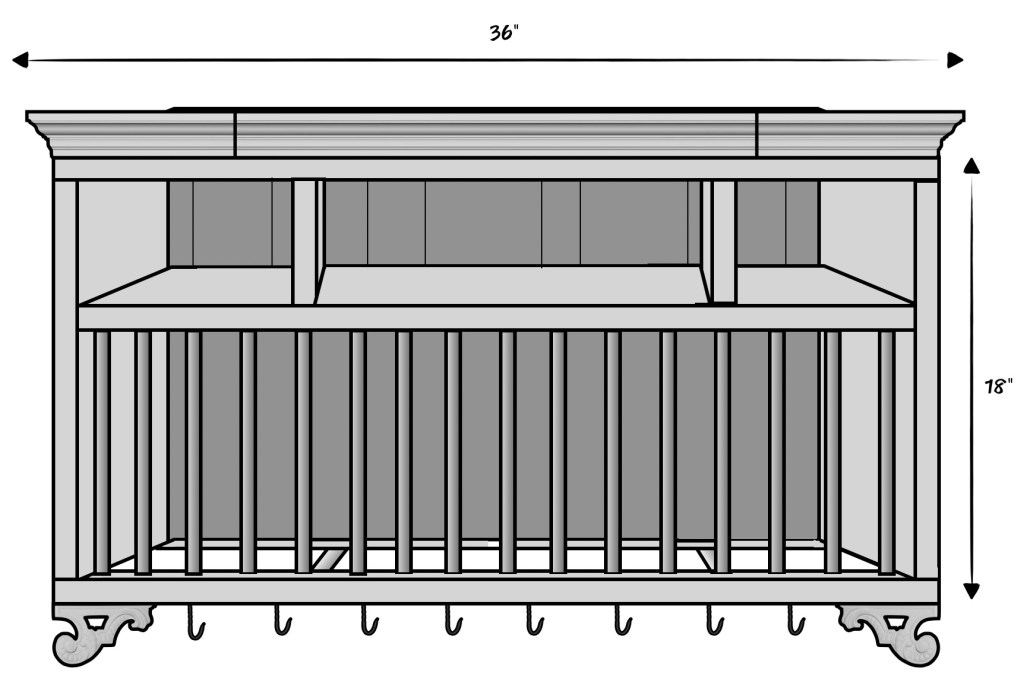
I can make it the perfect size for the space we have. One of the most important DIY things I’ve learned is that there’s no sense in having some thing that’s almost correct. I designed my own with a bit of detail/trim — just a leeeeetle bit over the top. Out of period, yes, but a little gingerbread never hurt anybody.
My design
O
I do love the continuum — Just over 180 years ago a half block off Main Street, standing here on the same spot on the very same floor next to the old chimney, someone stood over a basin. Tucking away their plates into whatever this thing is called. Maybe they even built it themselves.
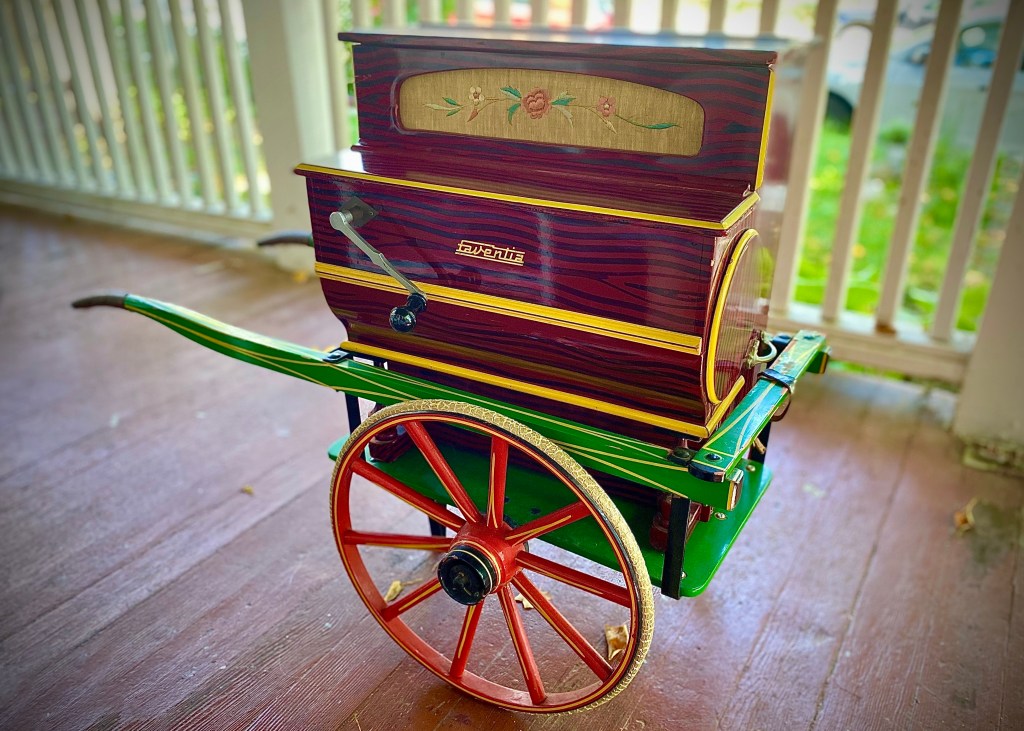
Took a drive down to Whitestone this morning, and picked up my very own barrel organ (piano). There is great news, and not-as-great news.
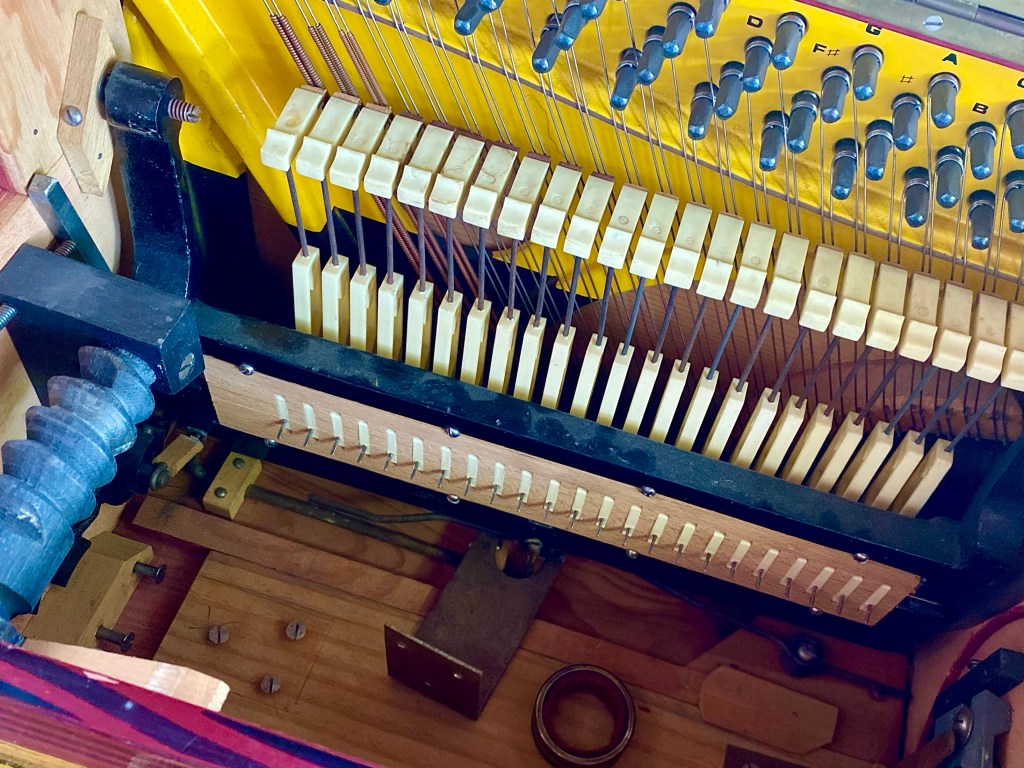
The great news is that it is in near-mint condition, and everything mechanical is completely operational without so much as a squeak. You couldn’t ask for a better from an instrument that’s sixty years old. The condition is absolutely uncanny — no paint fading, no rust on the strings or gears. Even the hammers are in pristine condition.
The seller didn’t know why it didn’t play. (Something inside.”) The reason is a simple one — It doesn’t have its cylinder. The cylinder looks exactly like a music box cylinder, only big. They came with six songs each, and were interchangeable so you could switch to different tunes.
However. The good news far outweighs the bad. Cylinders can be bought. From what I’ve seen, they come up now and then. I’ll just have to look on the auction sites I frequent.
These were manufactured in the nineteen-fifties and sixties for tourists visiting Italy and Spain. They’re about half size — full size would be about six feet tall.
It must’ve sat lovingly in some Nona’s front room. I plunked some notes; and while (of course) they were out of tune, they weren’t unrecognizable out of tune. In highly professional technical terms, I’d say “it sounds like a beat up classroom piano.” A video —
A great purchase! Sometimes we win, sometimes we lose. This one was a winner. =)



 Sit Still Phill