
And then, you run across that thing.
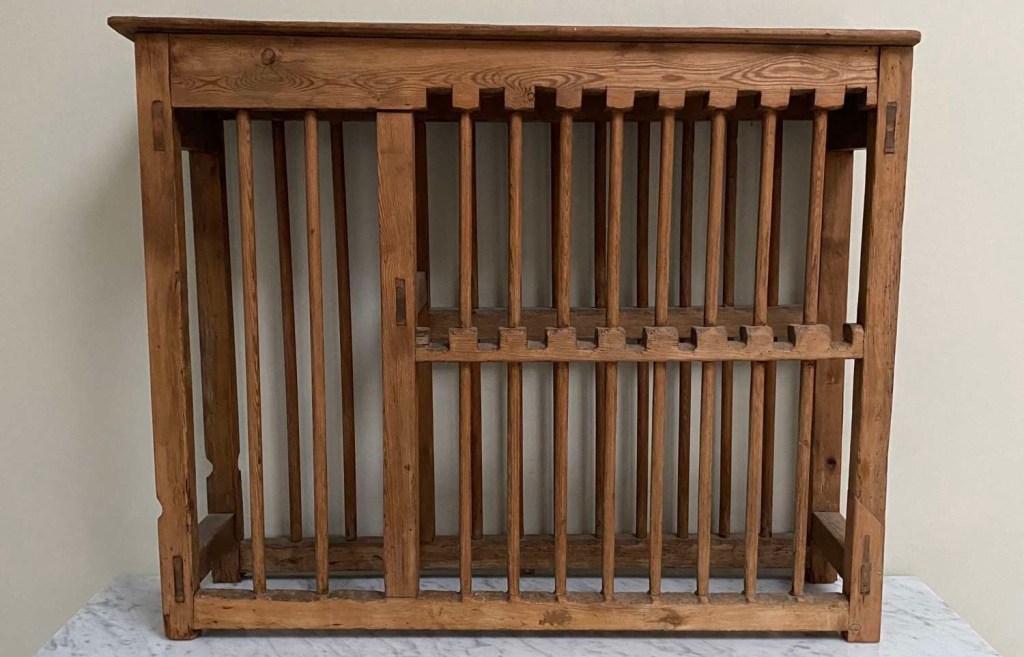
The thing that may not even have a specific name. In this case, I’m referring to a “wall-mounted early-1800s plate rack.” I read quite a bit about them, but never figured out exactly what it’s supposed to be called. They seemed to start disappearing with the Victorians. As far as the late-Colonial folks go, they probably didn’t need a name for it, knowing it more as “where my plates go.”
O
These hung on the wall over the sink. After washing, you put your clean plates directly into it so they could drip dry.
When kitchens started to become something to look at as well as work in, we decided that you shouldn’t be able to see all of our plates and stuff. Cabinets, drawers, and counters took the place of racks, shelves, and tables. Pots were no longer hung from the ceiling, crockery was put out of sight, and all of our kitchen stuff disappeared into hidden spaces.
You don’t see them very much anymore, other than non-functional versions in custom kitchens to display fancy plates. This is where the Historian’s Tax comes in.
No, you can’t walk into a store and buy one, but there are craftspeople out there who would be happy to make you one … for $400+. That’s for pine — not even oak or another decent hardwood. And some of the examples I’ve seen from craftspeople don’t have an open bottom; which defeats the purpose entirely. For far less than half, I can get some really nice cabinet-grade wood, and build my own.
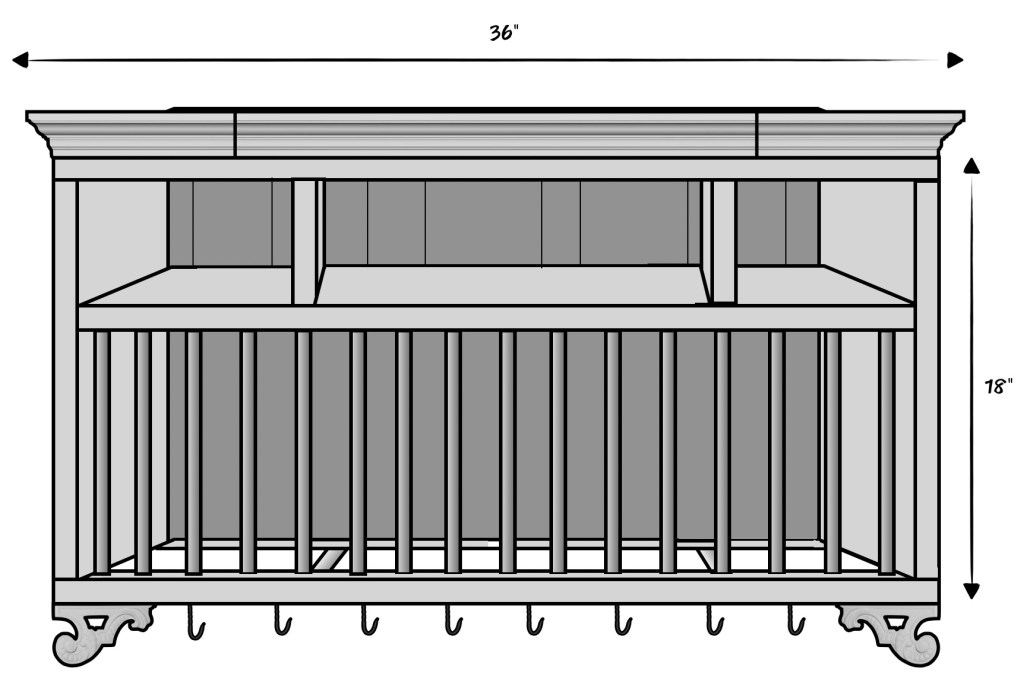
I can make it the perfect size for the space we have. One of the most important DIY things I’ve learned is that there’s no sense in having some thing that’s almost correct. I designed my own with a bit of detail/trim — just a leeeeetle bit over the top. Out of period, yes, but a little gingerbread never hurt anybody.
O
I do love the continuum — Just over 180 years ago a half block off Main Street, standing here on the same spot on the very same floor next to the old chimney, someone stood over a basin. Tucking away their plates into whatever this thing is called. Maybe they even built it themselves.
 Sit Still Phill